 Joyce Spann
Bilirubin is a yellow pigment produced when red blood cells break down—it’s what gives bile its colour and what turns skin and eyes yellow in jaundice. In adults, a blood test will flag it when levels exceed normal, but knowing what is a dangerous level of bilirubin in adults—and what “normal,” “elevated,” and “dangerous” actually mean in practical terms—is what most people want to know to understand their liver and bile duct health.
In adults, total bilirubin above 1.2 mg/dL (20.5 µmol/L) is considered elevated. Levels above 2.5-3 mg/dL (43-51 µmol/L) typically cause visible jaundice. Levels exceeding 10-12 mg/dL in acute liver failure or 20 mg/dL in chronic liver disease are considered in the danger zone and require immediate medical attention.
Normal Bilirubin Reference Ranges for Adults
| Type | Normal Range |
|---|---|
| Total bilirubin | 0.2 – 1.2 mg/dL (3.4 – 20.5 µmol/L) |
| Direct (conjugated) bilirubin | 0 – 0.3 mg/dL (0 – 5.1 µmol/L) |
| Indirect (unconjugated) bilirubin | 0.2 – 0.9 mg/dL (3.4 – 15.4 µmol/L) |
These reference ranges vary slightly between laboratories.
When Bilirubin Becomes Dangerous
The level considered dangerous depends on the clinical context – not just the number alone:
| Total Bilirubin Level | Clinical Significance |
|---|---|
| 1.2 – 2.5 mg/dL | Mildly elevated; monitor, investigate cause |
| 2.5 – 3 mg/dL | Jaundice becomes visible (skin and eyes) |
| 3 – 10 mg/dL | Significant; requires investigation and management |
| Above 10 mg/dL (acute liver failure) | Serious – requires urgent hepatology/ICU involvement |
| Above 20 mg/dL (chronic liver disease) | Indicates advanced disease; very high mortality risk |
| Above 25 mg/dL | Associated with neurological complications in some conditions |
Types of Elevated Bilirubin – Why It Matters
The type of bilirubin that’s elevated points to different underlying causes:
High Indirect (Unconjugated) Bilirubin
- Bilirubin is being produced faster than the liver can process it
- Causes: Haemolytic anaemia (rapid red blood cell breakdown), Gilbert’s syndrome (benign), haematoma reabsorption
High Direct (Conjugated) Bilirubin
- The liver is processing bilirubin but can’t excrete it into bile
- Causes: Gallstones blocking the bile duct, cholestasis, liver disease, primary biliary cholangitis
High Both Types
- Usually indicates significant liver disease
- Causes: Hepatitis (viral, alcoholic, autoimmune), cirrhosis, drug-induced liver injury
Gilbert’s Syndrome – The Benign Cause
Gilbert’s syndrome is a common, benign genetic condition affecting 3-10% of the population in which bilirubin is mildly elevated (usually 1.2-3 mg/dL) due to reduced liver enzyme activity. It:
- Causes no symptoms in most people
- Is not dangerous
- Can cause mild, intermittent yellowing during fasting, illness, or physical stress
- Requires no treatment
Many people discover Gilbert’s syndrome incidentally on a routine blood test.
Symptoms of High Bilirubin in Adults
| Level | Typical Symptoms |
|---|---|
| Mildly elevated (<2.5 mg/dL) | Often none |
| Moderate (2.5-5 mg/dL) | Yellow tinge to skin and whites of eyes, darker urine |
| High (5-10 mg/dL) | Obvious jaundice, pale stools, fatigue, itching |
| Very high (>10 mg/dL) | Deep jaundice, confusion (if encephalopathy), severe fatigue |
When to Seek Urgent Medical Attention
Go to the ER or seek urgent care if elevated bilirubin is accompanied by:
- Severe right upper quadrant pain (possible gallbladder emergency)
- High fever and jaundice (possible cholangitis – a life-threatening bile duct infection)
- Mental confusion alongside jaundice (hepatic encephalopathy)
- Rapid onset jaundice after medication change (drug-induced liver injury)
- Jaundice in a pregnant woman (possible obstetric cholestasis)
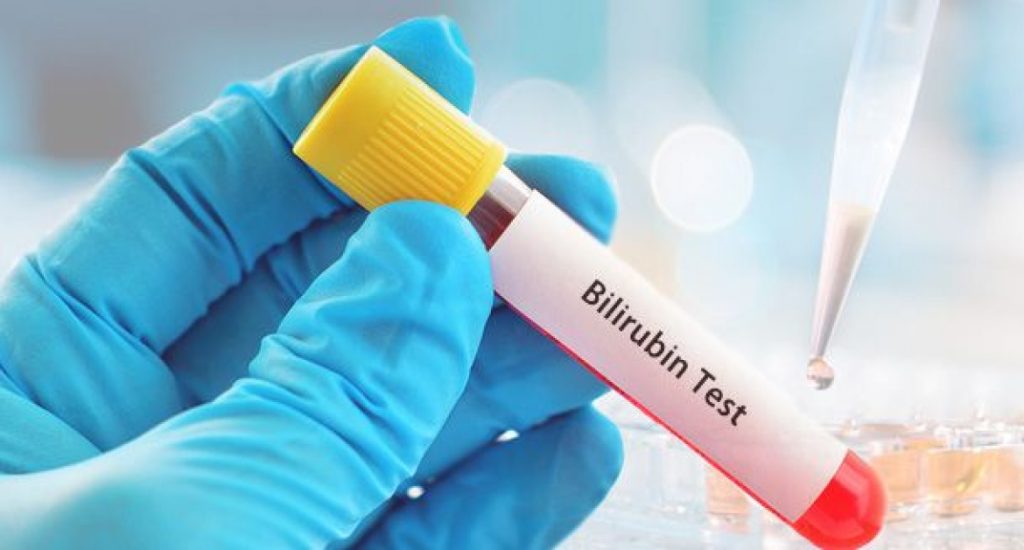
How Bilirubin Is Tested
A standard liver function panel (LFTs) includes total, direct, and indirect bilirubin. It also includes ALT, AST, ALP, and GGT – which together help pinpoint whether the elevated bilirubin is from:
Bottom Line
In adults, bilirubin above 1.2 mg/dL is elevated; above 2.5 mg/dL causes visible jaundice. The number alone doesn’t tell you how dangerous it is – the type of bilirubin elevated, the rate of change, and what else is happening in the liver and bile system are what determine urgency. Mild, isolated elevation (especially if indirect) is often Gilbert’s syndrome – benign and manageable. Significant or rapidly rising levels warrant prompt medical evaluation.